In the competitive arena of product packaging, your label is more than just an identifier—it’s your first brand ambassador, your product’s storyteller, and the decisive detail that can sway a consumer’s choice. When selecting this crucial brand voice, two primary options emerge: the versatile regular label and the sleek, contoured shrink label. Understanding their distinct differences is essential for making an informed choice that optimizes your product’s appeal, functionality, and, ultimately, its market performance. For brands, from startups to market leaders, this decision transcends mere packaging—it’s a fundamental branding strategy.
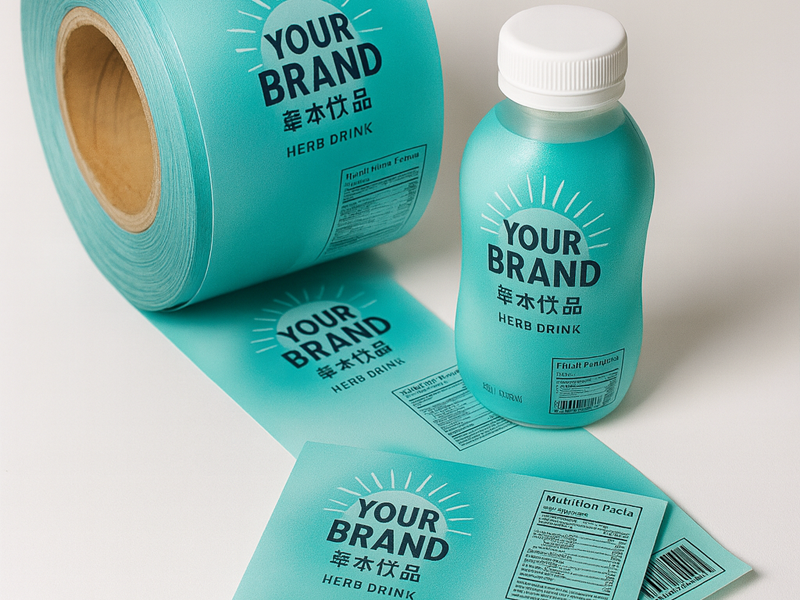
Regular labels, such as pressure-sensitive stickers and glue-applied paper labels, have served as the reliable industry standard for decades. They are designed for application on flat or gently curved surfaces. A shrink label, however, operates on a different principle. Crafted from a specialized plastic film, it is loosely placed around a container and then subjected to heat. This process causes the film to shrink tightly, conforming to every contour and crevice of the container’s shape, resulting in a seamless, second-skin effect that standard labels cannot achieve.
The core distinction lies in their composition and the method by which they adhere to a product.
Standard labels consist of a face material—often paper, vinyl, or polypropylene—backed by a pressure-sensitive adhesive. They are pressed onto a surface and remain fixed in place. This makes them ideal for flat panels, simple curves, and areas where a tight, form-fitting wrap is unnecessary. Common examples include a logo on a mason jar or a nutritional facts panel on a cardboard box.
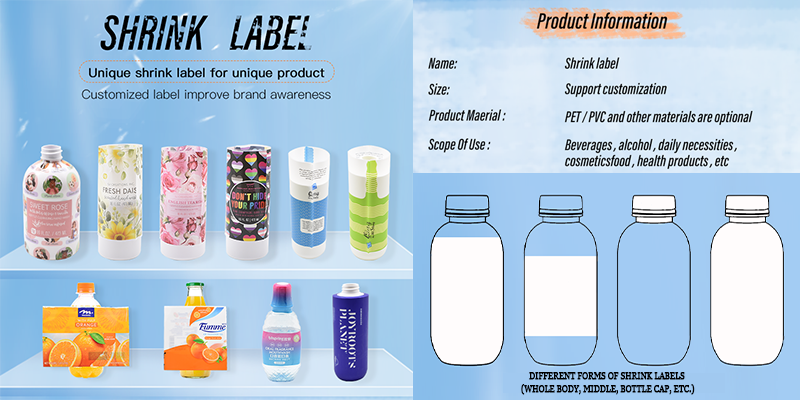
In contrast, shrink labels are manufactured from oriented plastic films like PVC, PETG, or OPS. They begin as a pre-printed sleeve that is larger than the container. Once slipped over the product, the container passes through a heat tunnel. The controlled heat causes the film to shrink uniformly, molding itself perfectly to complex geometries. This technology elegantly wraps intricate shapes, such as a sculpted craft beer bottle, a ridged cosmetic jar, or a sports drink bottle with an ergonomic grip. It offers complete 360-degree coverage without relying on adhesive across the main graphic area, which is a significant functional advantage.
This is where the shrink label truly excels. Its ability to conform to complex shapes unlocks unparalleled creative opportunities for brand expression.
Full-Body Canvas: A shrink label transforms the entire container into a printable canvas. It allows for stunning, uninterrupted graphics that flow seamlessly over curves and edges, creating a high-impact, immersive brand experience. This "no-label look" delivers a premium, modern, and sleek appearance that is often associated with higher-value products.
Superior Shelf Presence: The glossy, tight finish and the capability for vibrant, high-definition printing make products stand out in a crowded retail environment. The label becomes an integral part of the container's structure, adding a tactile, high-quality feel that flat labels cannot replicate.
Design Versatility: These labels can easily incorporate features like transparent windows to showcase the product, textured finishes for a unique feel, or intricate cut-outs. While regular labels are excellent for bold, flat graphics and essential information, they can struggle with deep recesses or pronounced contours without unsightly wrinkling or edge-lifting.
Each labeling option carries its own set of practical and strategic implications.
Durability: Shrink labels offer superior resistance to moisture, scuffs, and chemicals. Their sealed, drum-tight application makes them ideal for products that are chilled, frequently handled, or used in humid environments—think of beverage bottles in an ice bucket or shampoo bottles in a shower. Regular paper labels can be vulnerable to moisture damage and edge peeling, though plastic-based films offer better durability for many applications.
Cost and Production: Regular labels often have a lower per-unit cost and can be applied using faster, simpler equipment. They represent a highly cost-effective solution for high-volume runs on standard packaging shapes. The production of shrink labels involves more complex steps, including precise film printing and controlled heat application. However, for containers with complex shapes, a single shrink sleeve can be more economical and aesthetically superior than using multiple regular labels. For manufacturers like Kwinpack, with advanced digital printing capabilities and deep expertise in film science, producing consistent, high-quality shrink labels at scale is a core strength.
Sustainability: This is a critical modern consideration. The environmental profile depends heavily on material choices. Regular labels made from recycled paper can align with compostability or recyclability goals. The shrink label industry is innovating rapidly, moving away from traditional PVC towards more readily recyclable materials like PETG. Leading packaging partners now offer solutions using mono-material films that are compatible with recycling streams and can support certifications like GRS (Global Recycled Standard). The optimal choice should reflect a brand’s specific sustainability commitments and the end-of-life reality of the entire package.
The best choice is inherently tied to your product's identity, container, and goals.
Choose a shrink label if:
Your container has a complex, curved, or unique shape.
You desire a high-end, seamless appearance with full-body graphics.
Your product requires durable, moisture-resistant packaging (e.g., beverages, frozen foods, personal care items).
Maximum shelf impact and a premium tactile experience are top priorities.
Choose a regular label if:
Your packaging features large, flat, or simply curved surfaces.
Your primary need is for clear, cost-effective information labeling (ingredients, barcodes, branding on a flat panel).
You are aiming for a simple, classic, or artisanal aesthetic, potentially using materials like kraft paper.
Your production line is optimized for high-speed, adhesive-based label application.
For over two decades, partners like Kwinpack have guided global brands through this precise decision-making process. With expertise spanning digital printing to comprehensive material science, and backed by internationally recognized certifications (ISO, BRC, FDA), an experienced manufacturer can provide invaluable guidance. They can supply prototypes for hands-on evaluation, ensuring your chosen label—whether a vivid shrink label that hugs every curve or a crisp, classic regular label—perfectly articulates your brand story while meeting the practical demands of the global marketplace.
Ultimately, a label is a critical component of your product’s identity. By understanding the distinct advantages of shrink and regular labels, you can make a strategic decision that ensures your packaging doesn’t just inform, but also inspires, protects, and persuades.

 EN
EN