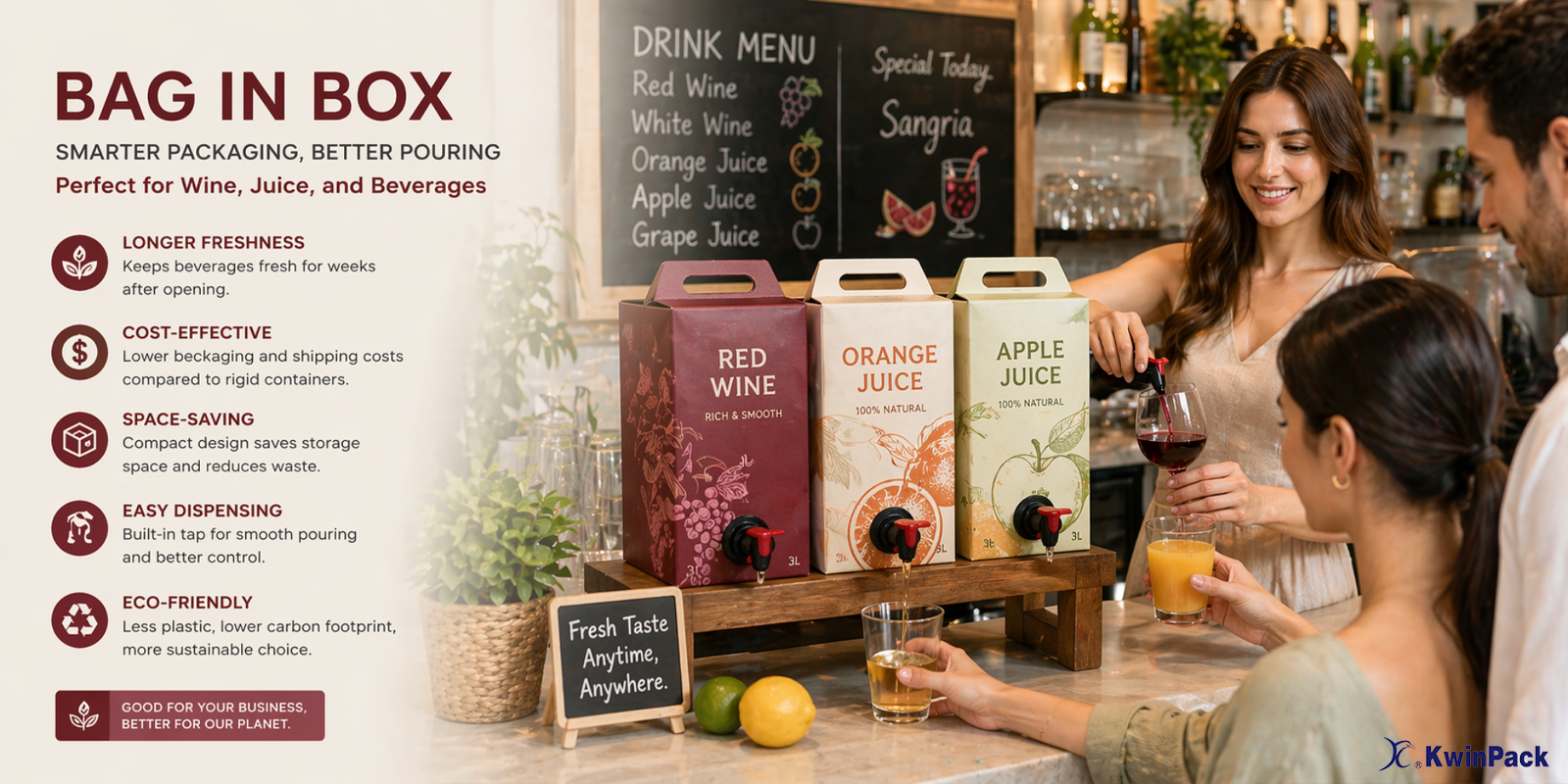
In today’s competitive packaging market, businesses are always looking for solutions that are cost-effective, sustainable, and high-performance. One such packaging solution gaining popularity across multiple industries is Bag-in-Box (BIB).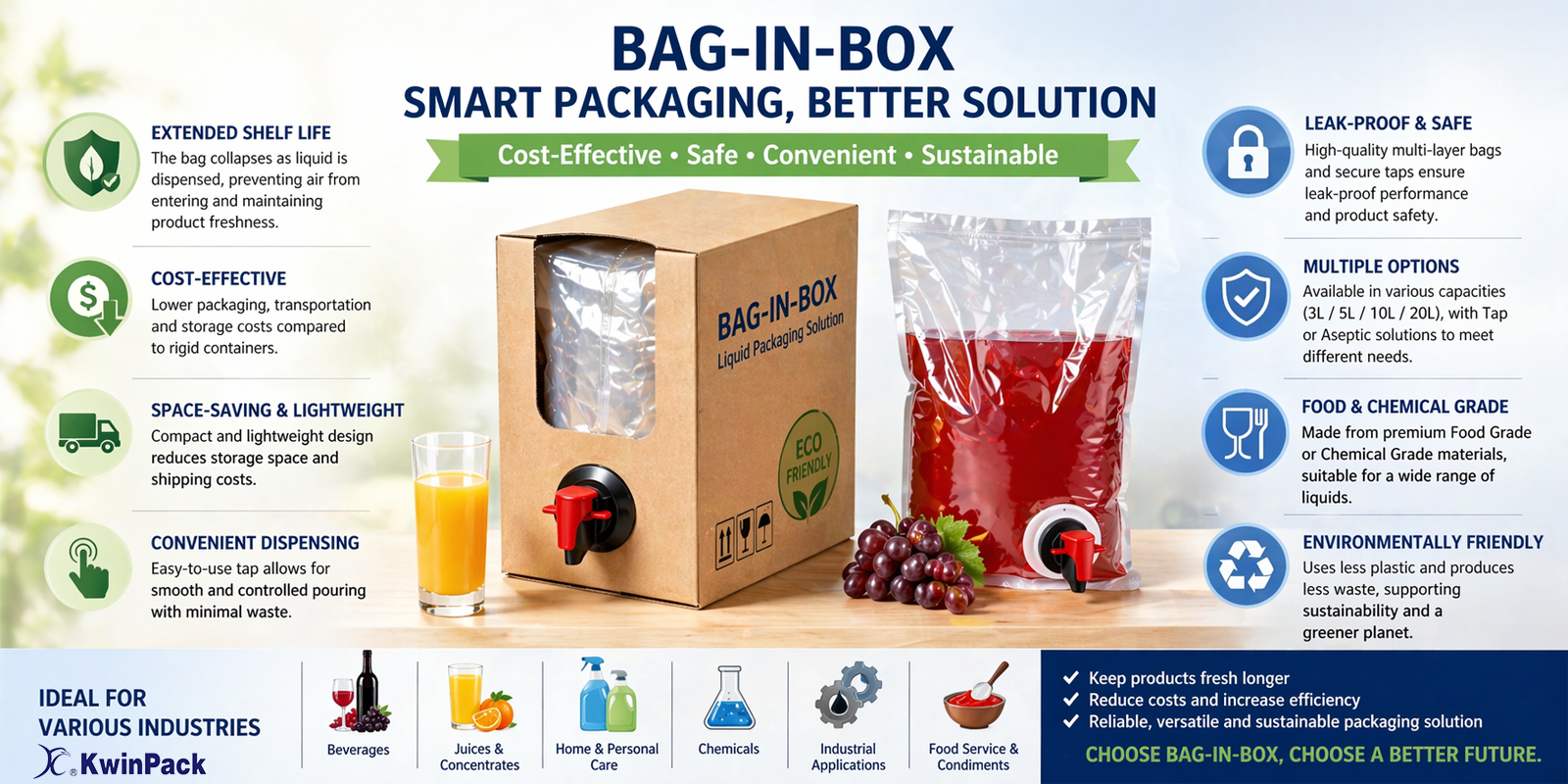
Bag-in-Box is becoming a preferred choice for liquid packaging needs, especially in the food, beverage, and chemical industries.
What is Bag-in-Box Packaging?
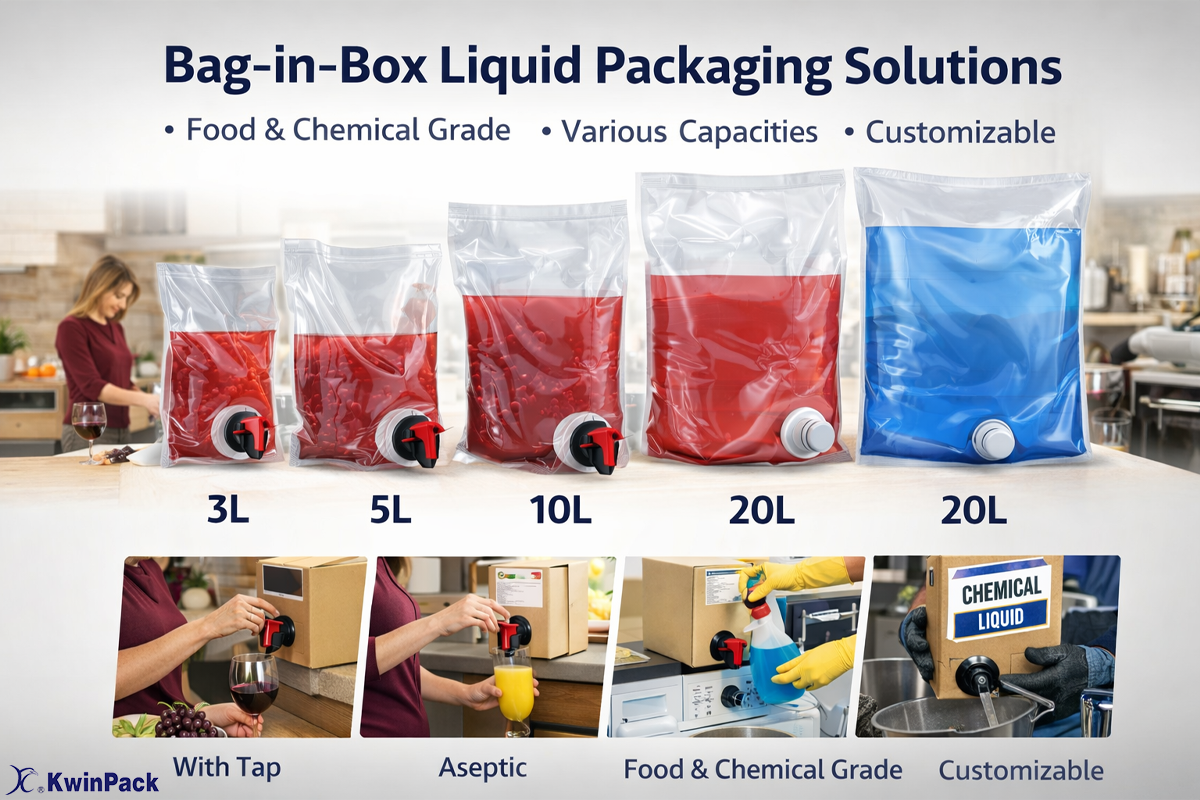
Bag-in-Box (BIB) is a packaging system made of a flexible inner bag and a sturdy outer box, designed to store, transport, and dispense liquid products.
·Inner Bag: Made from multi-layer composite materials like PET/AL/PE, providing barrier protection against oxygen, moisture, and light.
·Outer Box: Typically made from corrugated cardboard for added protection, ease of handling, and branding opportunities.
·Dispensing Tap: A built-in tap or spout makes dispensing liquids easy, ensuring minimal wastage and smooth pouring.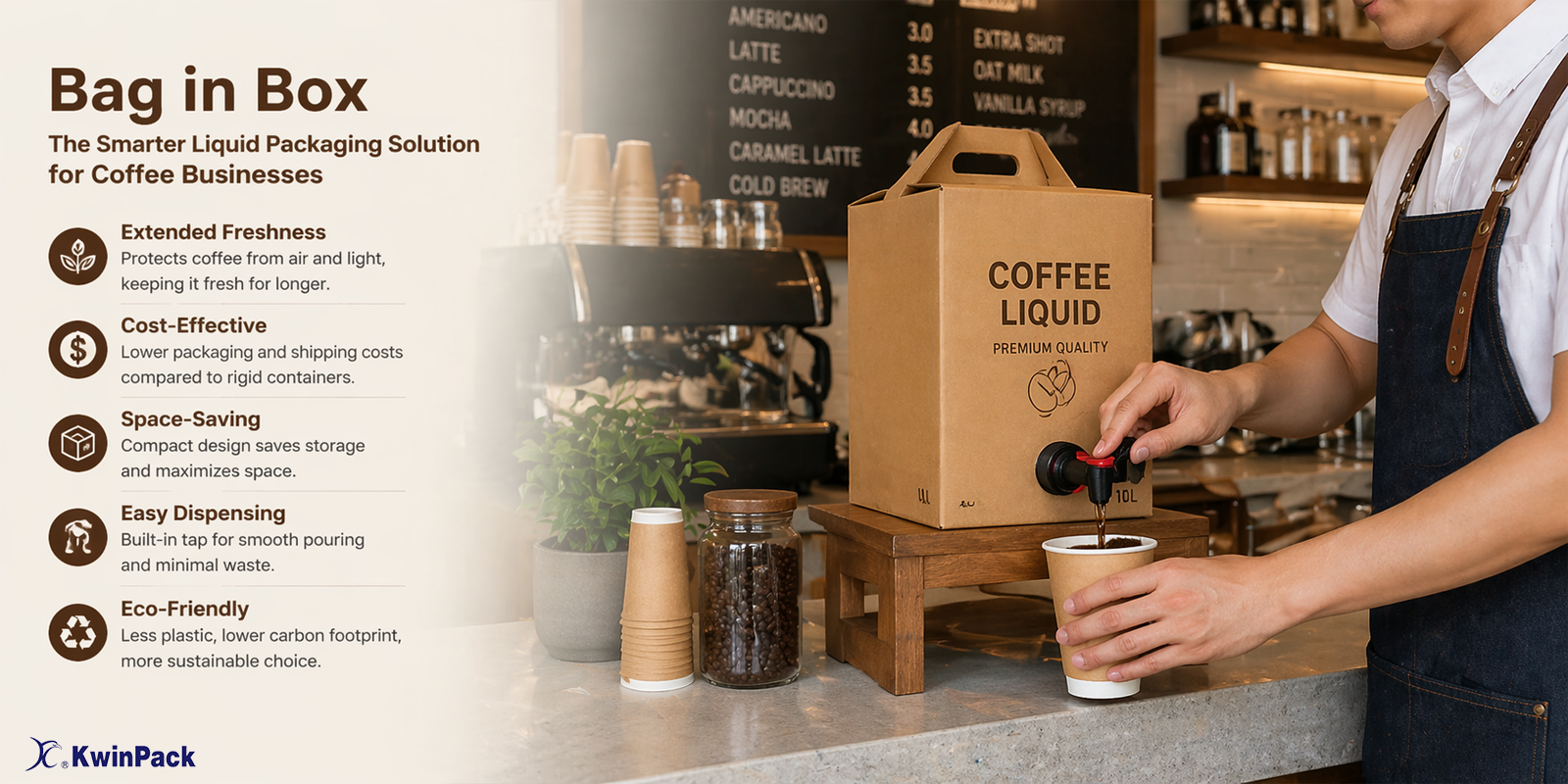
Key Advantages of Bag-in-Box Packaging
1. Extended Freshness
One of the standout benefits of Bag-in-Box packaging is its ability to keep liquids fresh. As the liquid is dispensed from the bag, the bag automatically collapses, preventing air from entering the bag and reducing the risk of oxidation.
This feature is particularly beneficial for products such as wine, juice, and coffee liquid, which require longer shelf life and preservation of flavor after opening.
2. Cost Savings
Bag-in-Box is a cost-effective packaging solution, offering businesses a significant reduction in both production and transportation costs.
·Lower Material Costs: The production cost of Bag-in-Box packaging is generally lower than rigid containers like bottles or cans.
·Reduced Shipping and Storage Costs: The compact and lightweight design allows for easier storage and more efficient transportation, ultimately leading to savings in logistics.
3. Eco-Friendly Design
As sustainability becomes a growing priority, Bag-in-Box is an ideal choice for businesses looking for eco-friendly packaging. It provides several environmental benefits:
·Reduced Plastic Usage: Compared to traditional plastic bottles or glass containers, BIB packaging uses less plastic and relies on recyclable cardboard for the outer box.
·Lower Carbon Footprint: The lighter weight and space-saving design help reduce carbon emissions during transportation.
·Sustainable Materials: The inner bag materials are typically recyclable, contributing to reduced waste in the long run.
4. Versatility Across Multiple Applications
Bag-in-Box packaging is not limited to the food and beverage industry; it is suitable for a wide range of products:
·Beverages: Wine, juice, coffee, and milk
·Industrial Applications: Lubricants, chemicals, and agricultural products like liquid fertilizers
·Household and Personal Care Products: Detergents, cleaning solutions, and liquid soaps
The flexibility of Bag-in-Box makes it a perfect packaging solution for varied liquids across multiple industries.
Why Choose Bag-in-Box?
In a world where cost efficiency, sustainability, and product integrity are key, Bag-in-Box packaging stands out as a smart solution for businesses. Its combination of long-lasting freshness, reduced costs, and eco-friendly design makes it the ideal choice for modern packaging needs.
Whether you are in the beverage industry, involved in chemical packaging, or selling household products, Bag-in-Box offers high performance, lower environmental impact, and reliable storage and dispensing.
By adopting Bag-in-Box, businesses can ensure greater efficiency, cost savings, and a greener future.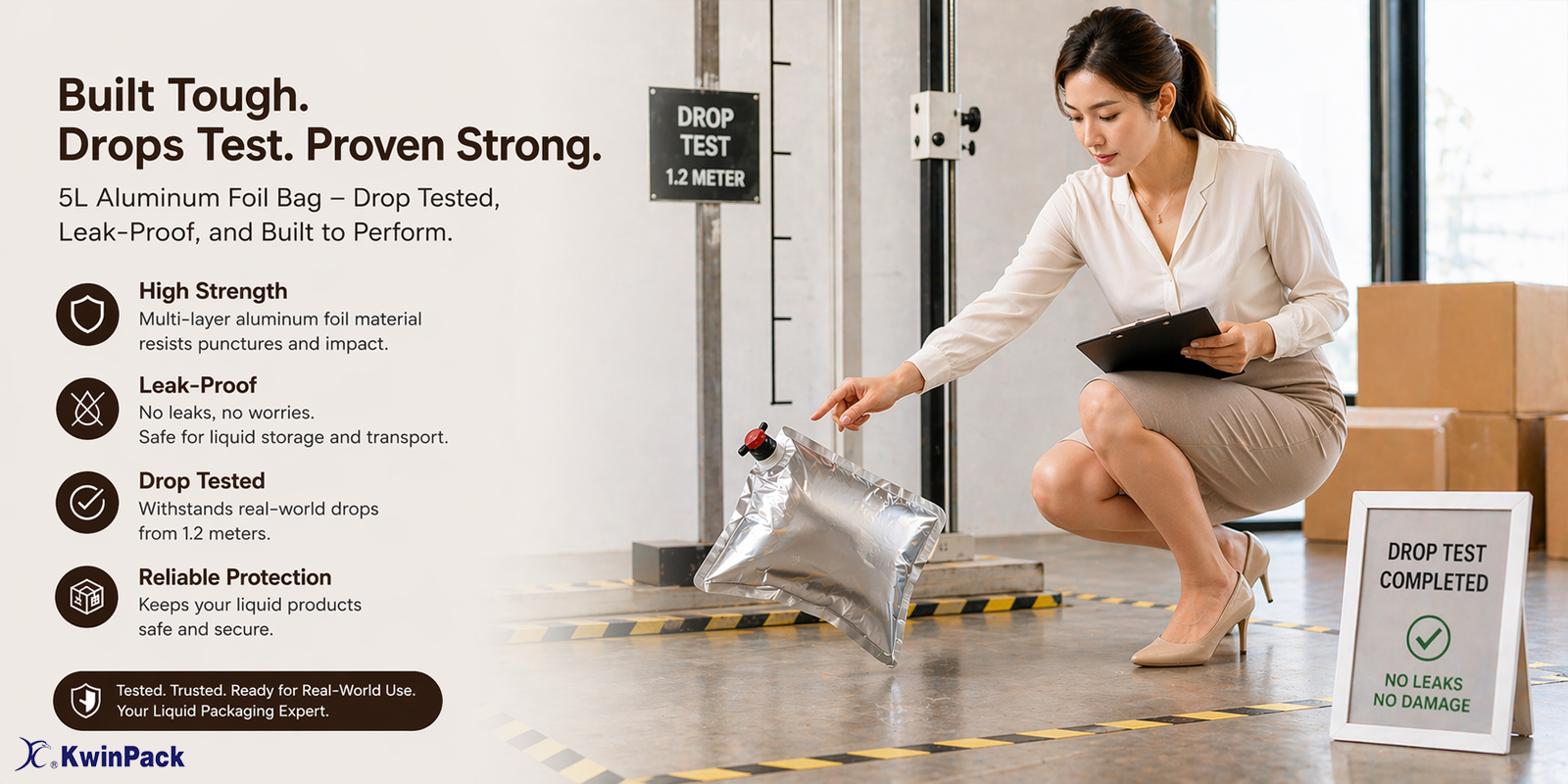
#Bag-in-Box packaging #liquid packaging solution #sustainable packaging #eco-friendly packaging #food grade packaging #chemical liquid packaging #beverage packaging #wine packaging bags #juice bag packaging #coffee liquid packaging, #packaging cost savings #multi-use packaging #recyclable packaging

 EN
EN